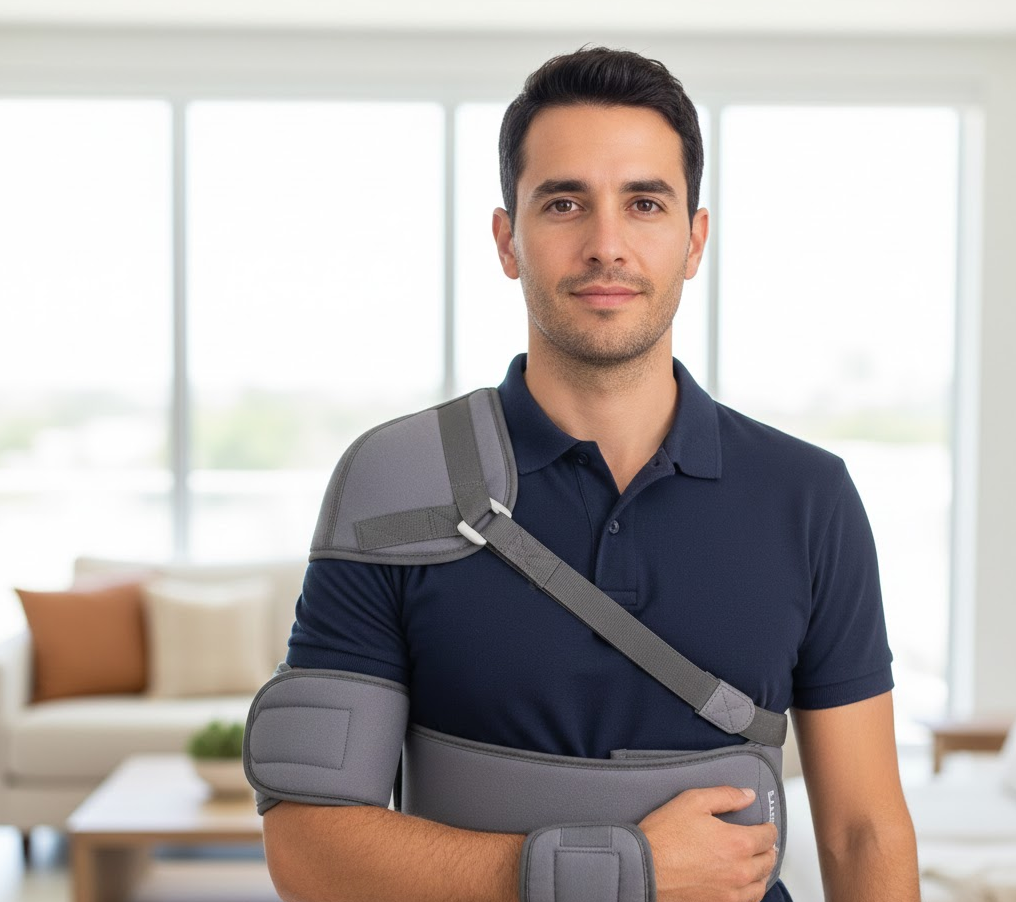
If you’ve been told you need a shoulder immobilizer, you’re probably dealing with pain, stiffness, or a recent injury or surgery. Understanding your options and knowing what to expect can make recovery much easier.
MacPherson’s Medical Supply has spent over 80 years helping people in the Rio Grande Valley find the right medical supply and durable medical equipment for safe, comfortable recovery at home. In this guide, we’ll cover what a shoulder immobilizer is, the different types, how to wear one safely, and how we can support you here in South Texas.
Start Your Healing Journey with the Right Shoulder Immobilizer
A shoulder immobilizer is a type of orthopedic bracing designed to hold your arm and shoulder in a fixed, protected position. It combines a sling for the forearm with straps or a waist band that limit shoulder movement, keeping your arm close to your body and reducing strain on the shoulder joint, ligaments, and muscles.
Common Injuries and Conditions That Require Immobilization
You might be prescribed a shoulder immobilizer for:
- Rotator cuff repair or other shoulder surgery
- Shoulder dislocation or subluxation
- Fractures of the upper arm, collarbone, or shoulder blade
- Severe sprains, strains, or soft-tissue injuries
- Shoulder arthritis flares after injections or procedures
If you live in the Rio Grande Valley and have had a recent orthopedic procedure, your care team may send you to a local medical supply provider like us to be fitted for the right DME and bracing.
Shoulder Immobilizer vs. Sling: What Is the Difference?
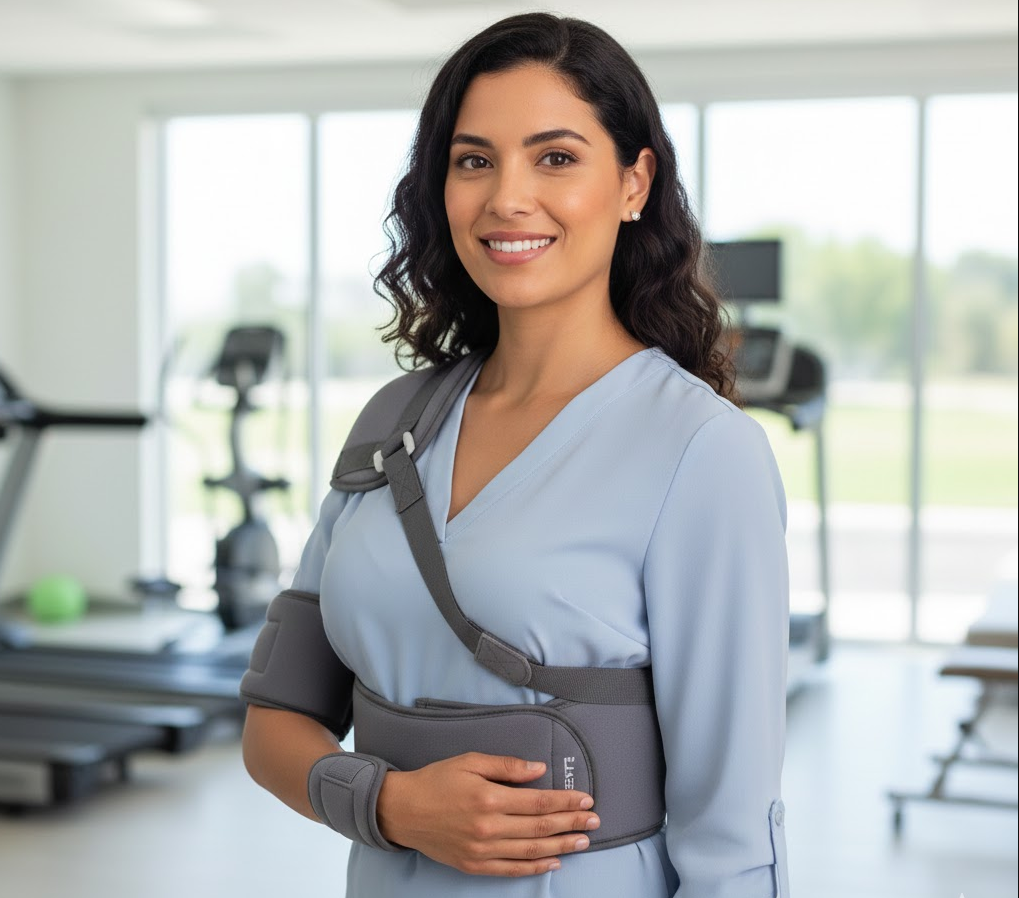
A standard arm sling mainly supports the weight of the arm and keeps the elbow bent but still allows some shoulder motion.
A shoulder immobilizer goes further:
- It has a strap or band around your waist or chest
- It holds your upper arm firmly against your body
- It limits forward, backward, and outward motion of the shoulder
In short, a sling is for support. A shoulder immobilizer is for support and restriction of motion.
Benefits of Using a Shoulder Immobilizer During Recovery
When fitted and worn correctly, a shoulder immobilizer can:
- Lessen pain by taking weight and strain off the shoulder
- Protect surgical repairs, fractures, and soft tissues
- Reduce the risk of re-injury from sudden movements
- Help you feel more stable during daily tasks
Many customers in Harlingen tell us they sleep better and move more safely once they’re in the proper brace—reliable solutions for everyday life while you heal.
Discover the Perfect Shoulder Immobilizer Type for Your Needs
Choosing the right style can make a big difference in comfort and recovery.
Standard Shoulder Immobilizers
These include a soft sling to support the forearm, a strap around the waist to keep the arm close to your body, and shoulder and neck straps to prevent slipping. Standard immobilizers are often used for sprains, stable fractures, and uncomplicated surgeries.
Abduction Pillows and Specialized Designs
More complex shoulder conditions may require a brace that holds your arm slightly away from your body using an abduction pillow.
These designs can help:
- Position the shoulder joint in a more anatomically friendly angle
- Reduce pressure on repaired tendons after rotator cuff or labral surgery
- Improve blood flow and reduce stiffness
Some specialized immobilizers are part of a broader orthopedic bracing plan. At MacPherson’s Medical Supply, we also work with custom bracing, complex rehab needs, and accessories like wheelchair supports and custom seating systems.
Pediatric and Plus-Size Options
Pediatric shoulder immobilizers use softer materials and gentle straps shaped for smaller shoulders. Plus-size options offer longer, wider straps with better coverage around the chest and waist.
We carry a range of sizes and can help you browse medical supplies that match your body, from shoulder immobilizers to beds, wheelchairs, canes, and commodes.
Embrace Confident Healing with the Right Fit
The best shoulder immobilizer protects your shoulder and fits comfortably enough that you’ll actually wear it.
Sizing and Fit Considerations
When we help you choose a brace, we look at your height and weight, arm length and chest size, which side is injured, and your specific diagnosis and surgeon’s instructions.
A good fit means your elbow sits snugly in the sling, your hand is slightly above elbow level, and your upper arm rests comfortably against your side or pillow.
Comfort, Materials, and Adjustability
Look for soft, breathable fabrics, padding along the neck and shoulder straps, and easy-to-adjust Velcro or buckles.
At our local store in Harlingen, we encourage you to try the immobilizer on and practice adjustments. Our team is trained to help with head-to-toe bracing, from shoulder supports to custom orthotics and compression hosiery.

Master Putting On Your Shoulder Immobilizer with Confidence
Always follow your doctor’s specific instructions. These general steps can help you understand the process.
Preparing and Positioning
Wear a soft shirt with short or loose sleeves. Front-button or zip-up shirts are easiest.
- Rest your injured arm gently across your stomach.
- Slide your forearm into the sling so your elbow sits all the way back in the pocket.
- Your hand should rest slightly higher than your elbow to reduce swelling.
- Bring the shoulder strap over your opposite shoulder and attach it to the sling.
- Fasten the waist or chest strap so it holds your arm against your body, snug but not tight.
If you have an abduction pillow, position it against your body first, then place your upper arm on top before closing straps.
Checking Fit and Circulation
Your fingers should be warm and pink, not numb or discolored. You should be able to wiggle your fingers. Straps should not dig, pinch, or rub your skin.
If you can’t get a comfortable fit, visit our local store or contact our team so we can help adjust your equipment.
Thrive in Daily Life While Your Shoulder Heals
A few practical changes can make day-to-day tasks safer and less stressful.
Sleeping and Resting
Most people sleep best on their back or on the side opposite the injured shoulder. Use pillows behind your upper back and under your injured arm for support.
We can help you explore hospital beds, lift chairs, and other durable medical equipment if getting in and out of bed is tough.
Bathing, Dressing, and Personal Care
Use slip-on shoes and loose, front-opening clothing. Bathroom safety products like grab bars, shower chairs, and non-slip mats can lower your fall risk. These are part of the home medical supplies we keep in stock.
Driving, Work, and Everyday Activities
Most of the time, you should not drive with a shoulder immobilizer. Ask for help with heavy lifting, break tasks into smaller steps, and rest often. If you rely on a wheelchair, scooter, or power mobility device, our technicians can adjust your seating and arm supports to match your temporary shoulder limitations.
Skin Care and Warning Signs
Check your skin daily where straps touch. Look for redness that doesn’t fade after 20-30 minutes, blisters, rashes, numbness, or increased swelling.
If you notice these, loosen the brace and call your provider. If pain suddenly worsens or you lose movement, seek medical help promptly.
Unlock Your Path to Full Recovery

A shoulder immobilizer is a temporary tool. Many people use an immobilizer for a few days to two weeks for minor injuries, four to six weeks after rotator cuff repairs, and longer for complex fractures. Never stop wearing your immobilizer early without your surgeon’s approval.
Conclusion
With the right fit and supportive equipment at home, a shoulder immobilizer can be a powerful tool to protect your shoulder and speed healing.
As a family-owned, local medical supply provider, we’re here to help you choose the right durable medical equipment, from shoulder immobilizers and orthopedic bracing to beds, wheelchairs, and respiratory solutions.
Visit our local store, check out our full range of services, or learn more about our story at MacPherson’s Medical Supply.
Visit MacPherson’s Medical Supply at 2325 S 77 Sunshine Strip, Ste. B, Harlingen, Texas 78550. Open Monday through Friday, 8:00 AM to 5:00 PM. Email admin@macmedsupply.com or call 956-412-9100.
Frequently Asked Questions
How long do I need to wear a shoulder immobilizer?
Most patients wear a shoulder immobilizer for 2 to 6 weeks, depending on injury severity. Your doctor will provide specific guidelines and monitor your healing progress.
Can I sleep with a shoulder immobilizer on?
Yes, wear your shoulder immobilizer while sleeping to prevent accidental movements. Try sleeping reclined or propped up with pillows for comfort and proper support.
How do I keep my shoulder immobilizer clean?
Most have removable, machine-washable covers. Wash on a gentle cycle with mild detergent and air dry completely. Wipe non-removable parts with a damp cloth as needed.
Can I remove my shoulder immobilizer to shower?
Only if your doctor approves. When permitted, keep your arm close to your body and avoid movements that strain the shoulder. Consider using a shower chair for safety.