If you’ve ever kicked off your shoes at the end of the day because your feet were throbbing, we understand how exhausting that can be. Arch support might be the missing piece you’ve been searching for.
At MacPherson’s Medical Supply, we’ve seen firsthand how foot pain can hold you back from the activities and moments that matter most. That’s why we’re passionate about helping you find the right arch support. Whether it’s an over-the-counter insole or a custom orthotic, we want to help you walk comfortably and confidently again. As a family-owned medical supply company, we’ve served the Rio Grande Valley for over 80 years. We treat every customer like family and are committed to making foot care easier and more reliable for you and your loved ones.
Discover What Your Foot Arches Do and Why They Matter
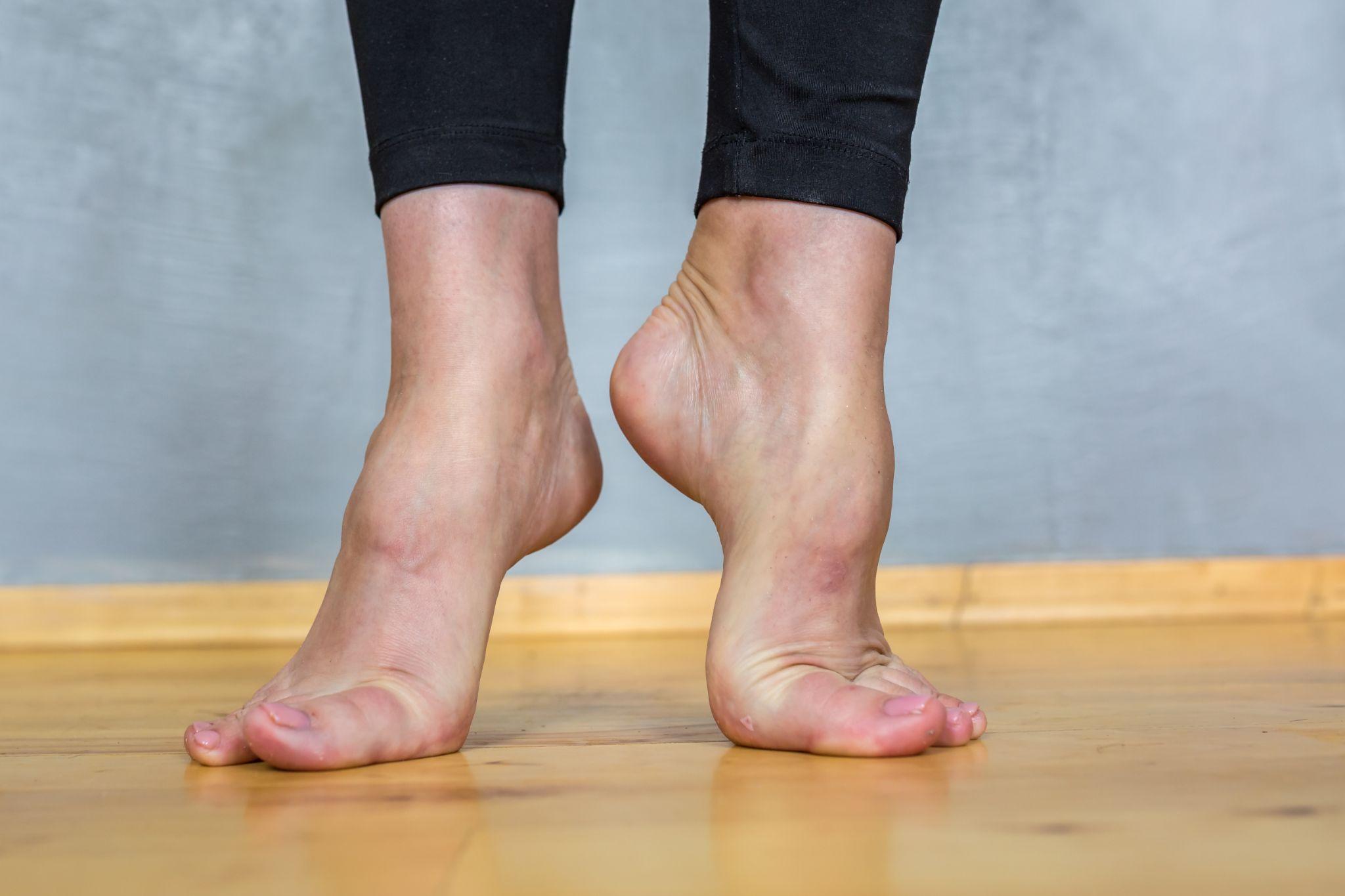
Your arches are more than a curve on the bottom of your feet. They’re built-in shock absorbers and stabilizers.
When you walk, run, or even stand, your arches:
- Absorb shock every time your heel hits the ground.
- Distribute pressure across your foot instead of letting one spot take all the force.
- Support your body weight and help keep your ankles, knees, hips, and back in better alignment.
Think of your arches like the suspension system on a car. If that suspension is weak or misaligned, everything above it starts to feel the impact. Without proper arch support, the stress can travel up through your legs, knees, and lower back.
Identify Your Arch Type for Better Foot Health
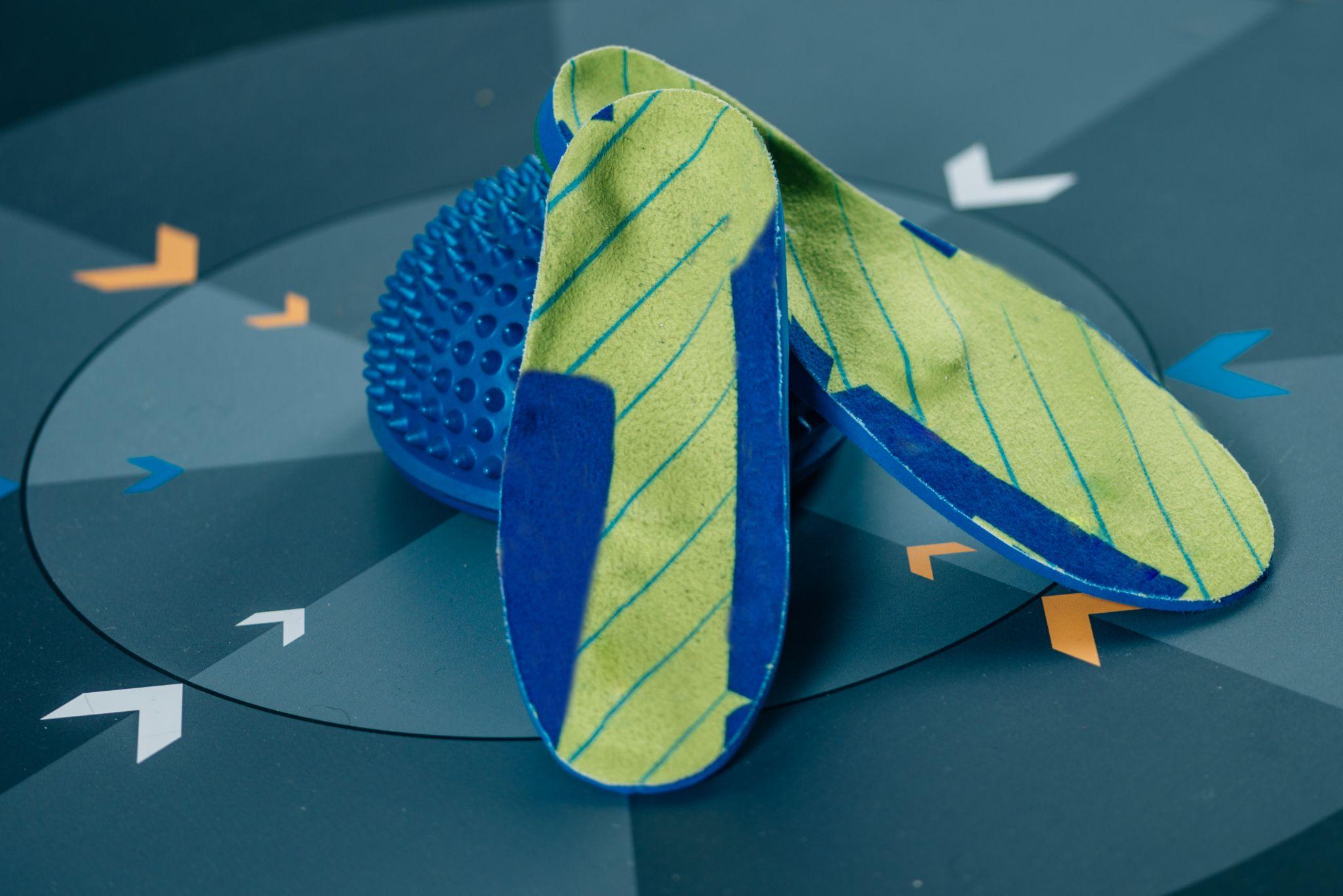
Knowing your arch type is one of the first steps to choosing the right arch support. Most feet fall into three main categories:
- Low arches (flat feet): The whole bottom of your foot almost completely touches the ground. Flat feet often need more structured support to keep the foot from rolling inward.
- Normal (medium) arches: You can see a clear curve on the inside of your foot, but not too high or too low. Most supportive shoes and standard arch support inserts are designed around this shape.
- High arches: There’s a big gap between your arch and the ground. High arches often need cushioned support to spread pressure more evenly.
A quick at-home arch test
Try this simple test: Wet the bottom of your foot, step onto a dry surface like paper or concrete, then step off and look at the footprint.
- Most of your foot shows with little inward curve: likely low arches.
- About half of the arch area shows: likely normal arches.
- A narrow band or almost no middle footprint: likely high arches.
This doesn’t replace a professional evaluation, but it gives us a starting point when we help you find the right arch support at our local store in Harlingen.
Understand How Poor Arch Support Causes Pain
When your arches aren’t supported, your feet start to compensate. Over time, this can affect the rest of your body.
Common problems linked to poor arch support include:
- Plantar fasciitis: sharp heel pain, especially with your first steps in the morning.
- Shin splints: aching pain along the front of your lower leg.
- Achilles tendon pain: soreness or tightness at the back of your heel.
- Knee, hip, and low back pain: from long-term misalignment and poor shock absorption.
Low or collapsing arches can cause overpronation, where the ankle rolls inward too much. High arches can create supination, where the foot rolls outward. Good arch support keeps the foot in a healthier position, absorbs shock, and redistributes pressure.
Explore Your Arch Support Options
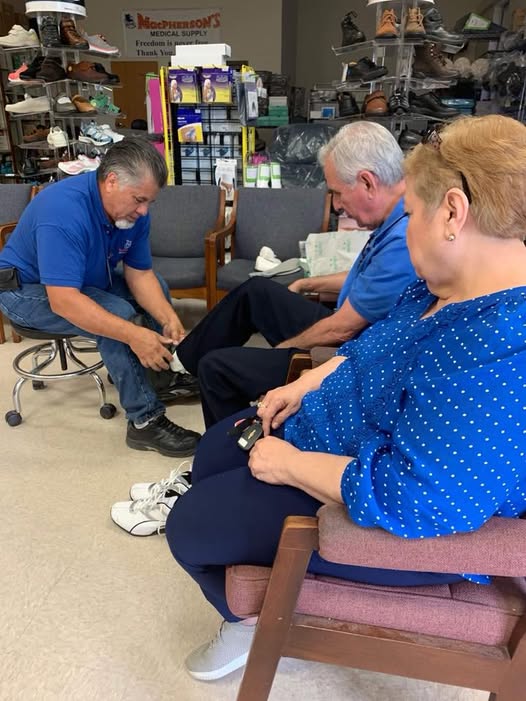
The right choice depends on your feet, your daily activities, and your budget.
Over-the-counter insoles and inserts
Over-the-counter insoles are a good starting point for mild soreness. They add cushioning, provide light to moderate arch support, and reduce pressure under the heel or ball of the foot. Look for insoles that match your arch type and main activity.
Supportive shoes and footwear
A supportive shoe should have a firm heel counter, bend only at the ball of the foot, and offer good arch contour inside. We often recommend pairing supportive footwear with the right durable medical equipment for people who use mobility aids, improving balance and reducing foot fatigue.
Custom orthotics
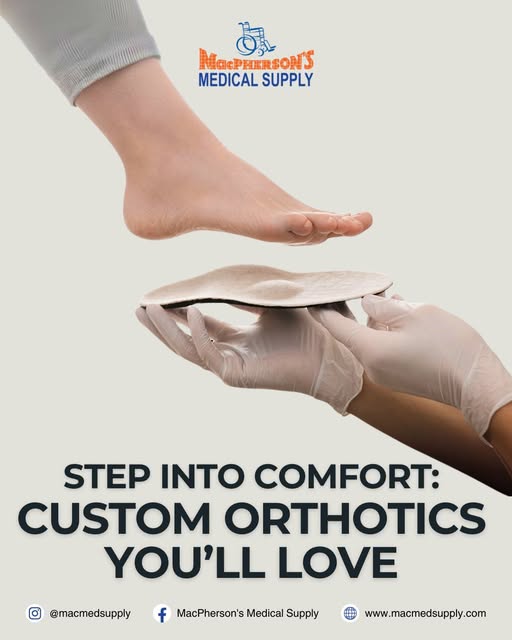
Custom orthotics are prescription devices made from a mold or scan of your feet. At MacPherson’s Medical Supply, we design and fabricate custom insoles and foot stabilizers in our own orthotics lab. These devices can correct excessive pronation or supination, redistribute pressure, and help with conditions like plantar fasciitis and chronic heel pain.
Custom orthotics are often worth it if you have ongoing pain, stand or walk for long hours at work, have diabetes, or already tried over-the-counter arch support without relief.
Find the Right Arch Support for Your Lifestyle
Matching arch support to your arch type
- Low arches / flat feet: You need more structured support. A firmer orthotic that stabilizes the heel and arch can help.
- Normal arches: Moderate support with good cushioning often works well.
- High arches: You may need more cushioning to spread pressure away from the heel and ball of the foot.
Consider your main activities too. On your feet all day? You may want a more durable insert. Runner or walker? Look for arch support designed for impact and motion control.
To see our full range of services, including custom orthotics and bracing, visit our full range of services.
Signs you chose the wrong support
Good arch support should feel supportive, not painful. Warning signs it’s not the right fit:
- Sharp pain in your arch, heel, or ball of the foot.
- New knee, hip, or back pain.
- Numbness, tingling, or blisters.
If something feels off, bring your shoes and insoles into our Harlingen store. Learn more about our story at MacPherson’s Medical Supply.
Build Stronger Arches with Daily Habits
Small daily habits can strengthen your feet and protect your arches:
- Stretch your calves and plantar fascia: Roll the bottom of your foot over a cold water bottle or massage ball.
- Do foot-strengthening exercises: Try towel scrunches or picking up small objects with your toes.
- Avoid walking barefoot on hard floors for long periods.
- Replace worn-out shoes: If your shoes are badly tilted or the soles are smooth, it’s time for new ones.
Take the Next Step Toward Pain-Free Walking
See a professional if your arch or heel pain lasts longer than two weeks, you feel burning or numbness in your feet, pain is affecting your sleep or work, or you have diabetes and notice new pressure points.
At MacPherson’s Medical Supply, we can help you compare over-the-counter insoles and supportive footwear, evaluate whether custom orthotics might help, and coordinate with your healthcare provider. Visit our local store to talk with our caring staff.
Conclusion
We understand how frustrating and exhausting it can be to live with foot pain—it affects everything from your daily activities to your overall quality of life. The good news is that proper arch support can make a real difference, and you don’t have to figure it out alone. Whether you need supportive shoes, over-the-counter inserts, or custom orthotics, our caring team is here to listen and help you find the relief you deserve.
Visit MacPherson’s Medical Supply at 2325 S 77 Sunshine Strip, Ste. B, Harlingen, Texas 78550. We’re open Monday through Friday from 8:00 AM to 5:00 PM. Email us at admin@macmedsupply.com or call 956-412-9100—we’d love to help you take the first step toward comfort.
Frequently Asked Questions About Arch Support
What is arch support and why is it important?
Arch support refers to the structure in your shoes or insoles that supports your foot’s natural curve. It absorbs shock, distributes pressure, and keeps your joints in better alignment, reducing pain and fatigue.
How can I tell what type of arch I have?
A wet footprint test can help. A mostly full footprint suggests low arches, about half showing suggests normal arches, and a narrow band suggests high arches.
How does poor arch support cause pain?
Without proper support, your feet may overpronate or supinate, contributing to plantar fasciitis, shin splints, and knee, hip, or back pain due to misalignment.
Is custom arch support worth it?
Custom orthotics are often worth it if you have ongoing pain, stand for long hours, or haven’t improved with over-the-counter insoles. They’re made from your exact foot shape for precise support.
How long does it take to adjust to new arch support?
Start with one to two hours daily and gradually increase. Mild tiredness is normal, but sharp pain or numbness means you should have the fit rechecked.