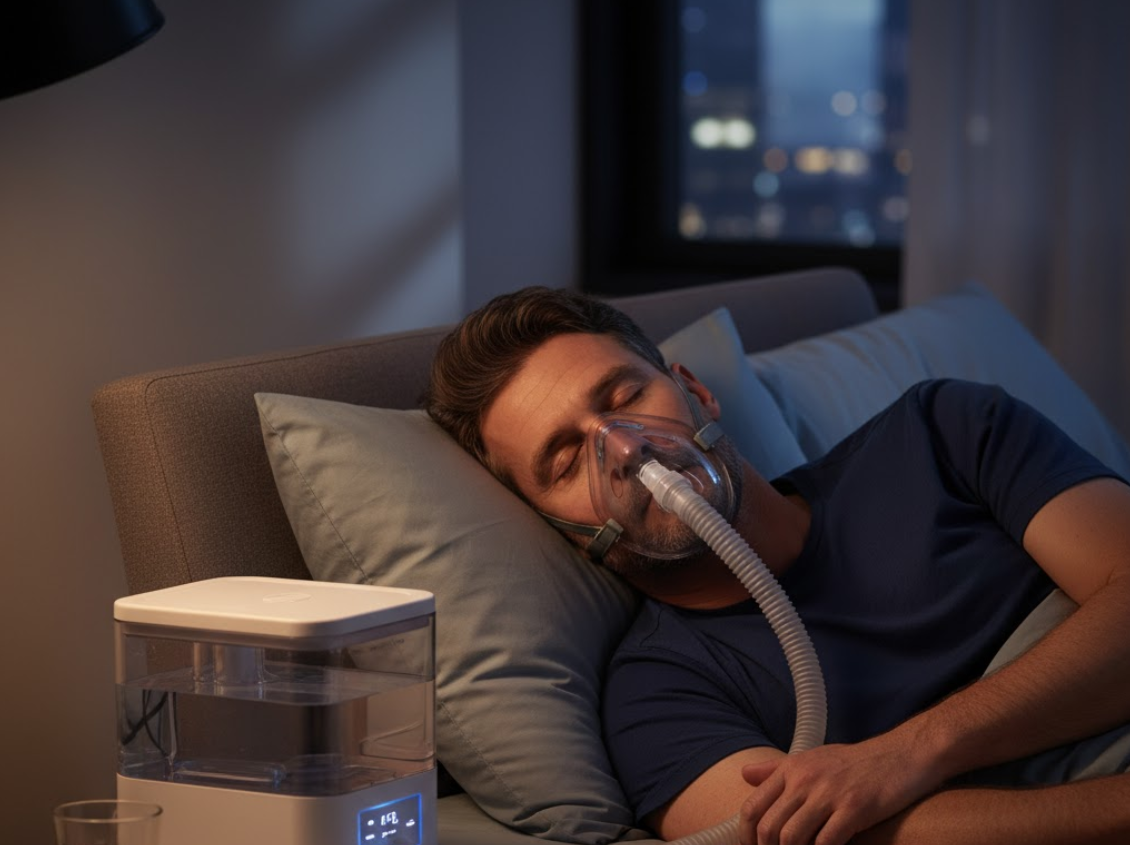
If dry air has made CPAP tough to stick with, a CPAP humidifier can change that. At MacPherson’s Medical Supply, we’ve helped people across the Rio Grande Valley make CPAP therapy more comfortable, night after night. We’re a family-owned, local medical supply team serving South Texas for over 80 years, and we’re here to make sleep therapy simple and breathable.
In this guide, we explain how humidification works, how to choose the right setup, and how to keep it clean. We’ll also share practical tips from our licensed respiratory therapist and our in-store team right here in Harlingen.
What A CPAP Humidifier Does
A CPAP humidifier adds moisture to the pressurized air from your CPAP machine. That moisture helps prevent dry mouth, sore throat, and nasal irritation.
With better hydration in your nose and throat, you breathe easier and sleep more comfortably. The result: You’re more likely to use CPAP consistently and see real benefits.
How Humidification Works With Positive Airflow
Your CPAP pushes air through a water chamber before the air reaches your mask. In heated units, a small hot plate warms the water to boost evaporation. In passive setups, air simply passes over room‑temperature water.
Heated tubing can keep that moisture from condensing in the hose. That means fewer gurgles, fewer cold spots, and steadier comfort.
Benefits For Nose, Throat, And Lungs
Moist air reduces dryness and inflammation in the upper airway. Many of us see less congestion, fewer nosebleeds, and less morning sore throat.
It can also help cut down on mouth breathing discomfort. When therapy feels better, adherence goes up.
Signs You May Need More Or Less Humidity
Raise humidity if you notice dry mouth, scratchy throat, or nasal irritation. Lower it if you wake to a damp mask, hear gurgling, or see water droplets in the hose. We can help you fine‑tune settings to match your home’s climate.
Types Of CPAP Humidifiers
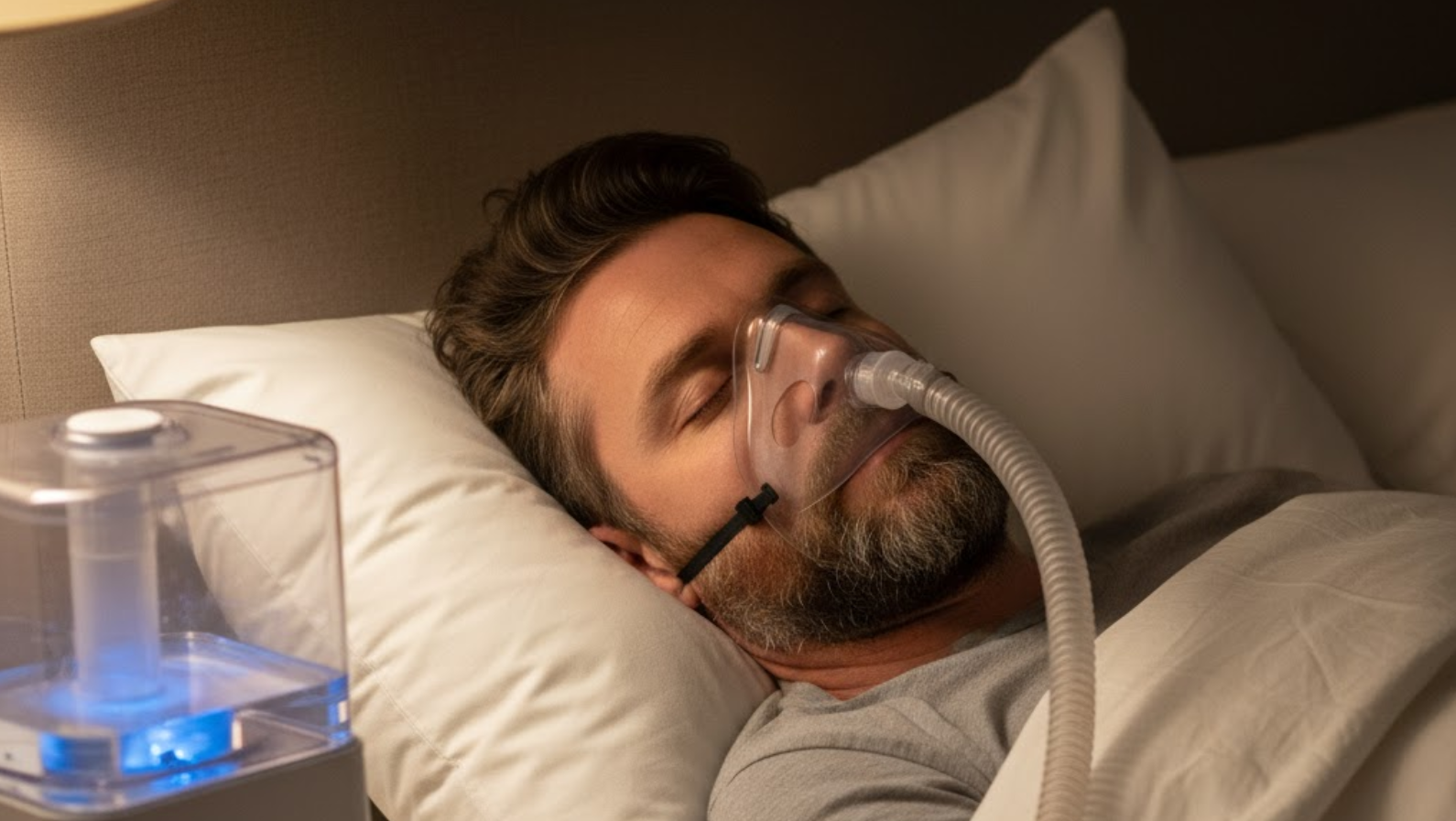
There’s no one right setup. The best choice depends on comfort, travel plans, and your CPAP machine.
Integrated Vs. Standalone Units
Integrated humidifiers are built into many CPAP machines. They’re compact and easy to use. Standalone humidifiers connect externally and often hold more water. They’re a good fit if you run higher humidity or sleep long hours.
Passive (Unheated) Vs. Heated Humidification
Passive, or passover, humidifiers add moisture without heat. They’re simple and use less power. Heated humidifiers warm the water to deliver more consistent humidity. Most users in South Texas prefer heated, especially when air conditioning is running at night.
Heated Plates And Heated Tubing Explained
A heated plate under the chamber evaporates water steadily through the night. Heated tubing keeps the hose slightly warm to prevent condensation, often called rainout. If you like higher humidity but hate water in the hose, heated tubing is worth it.
Setting And Adjusting Humidity

Small changes make a big difference. Start with the default setting and adjust based on symptoms and season.
Match Settings To Climate And Symptoms
In the Rio Grande Valley, indoor air can be dry from A/C. If your nose stings or your mouth is dry, bump humidity up a step. If you feel clammy or the mask gets damp, dial it down. Winter trips to drier climates may require higher settings than our humid South Texas evenings.
Preventing Rainout And Condensation
Keep the device level with your mask or slightly above it. Use heated tubing or a hose cover to maintain temperature. Reduce the humidity level a notch if you still see droplets. Avoid placing the unit on a cold floor or near an air vent.
Water Choices, Filling, And Handling Safely
Use distilled water only. It prevents mineral buildup and helps your chamber last. Empty and refill daily. Handle the chamber with clean hands and never overfill beyond the max line. For more support on sleep therapy gear, explore our full offerings under sleep and oxygen on our Services page: our full range of services.
Cleaning And Maintenance
A clean system keeps airways healthy and your equipment running right. It also protects your investment in DME.
Daily, Weekly, And Monthly Routines
Daily: Empty the chamber, rinse with warm, soapy water, and air dry. Refill with fresh distilled water before bed.
Weekly: Wash the chamber, mask cushion, and tubing with mild soap. Rinse well and let them fully air dry.
Monthly: Inspect seals and tubing for wear. If you see cloudiness, scale, or odors, deep clean and consider replacement.
Descaling, Disinfection, And Safe Drying
Descale with a 1:1 white vinegar and water soak for 15–20 minutes, then rinse thoroughly. Skip harsh chemicals that can damage plastics or irritate your airway. Air dry on a clean towel: don’t reassemble while damp.
When To Replace Chambers, Seals, And Tubing
Most chambers and tubing last about 6 months, depending on use and care. Masks and cushions vary by brand but often need earlier replacement. We can check fit and condition in store to keep your CPAP machines working their best.
Troubleshooting Common Problems
Run into an issue? We see these every day and can help you solve them quickly.
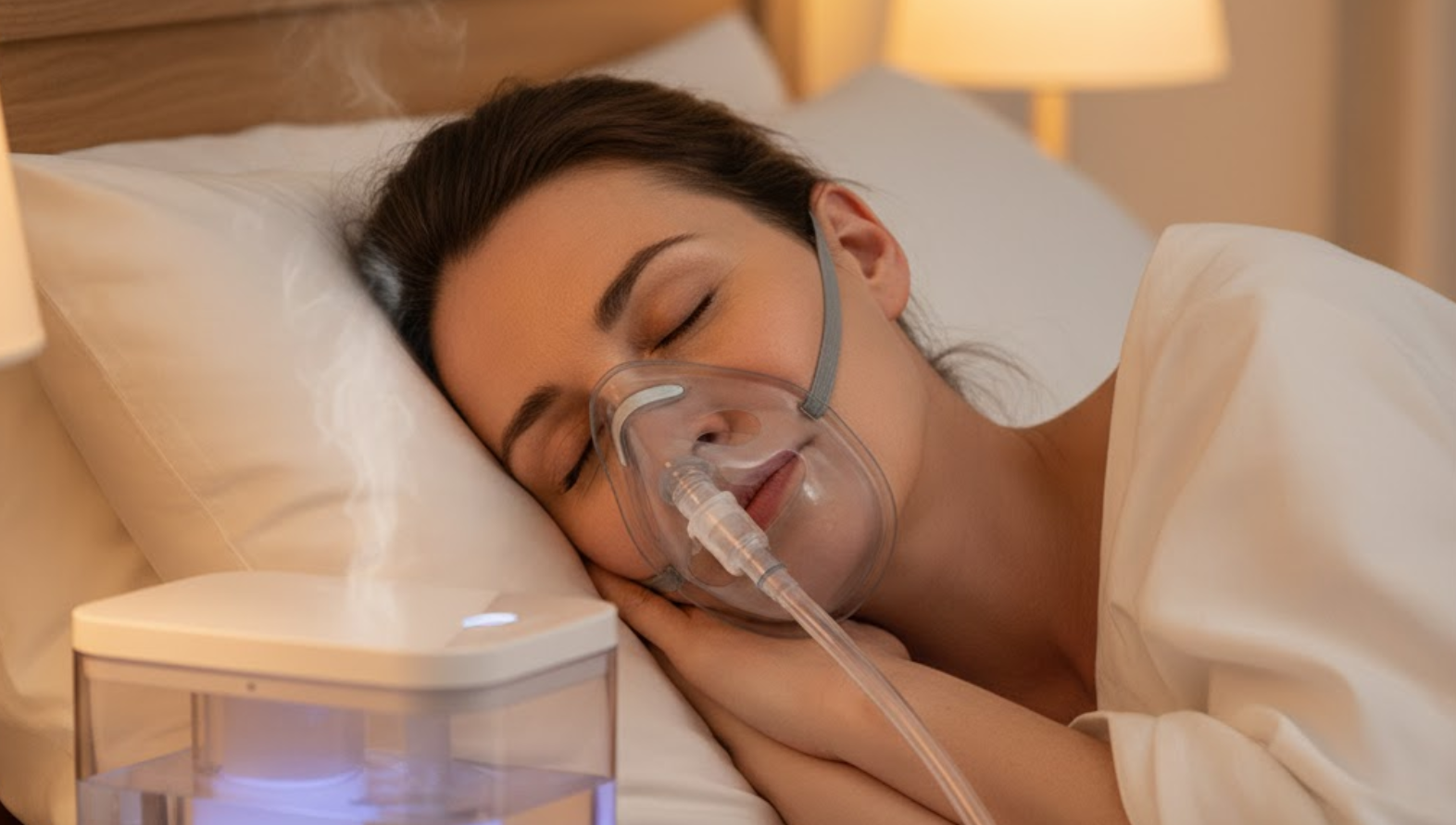
Dry Mouth, Congestion, And Sore Throat
Increase humidity one step at a time. If you’re a mouth breather, consider a full‑face mask or a soft chin strap. Saline rinses before bed can also help. Our respiratory therapist can tailor settings to your needs.
Leaks, Gurgling, Odors, And Mineral Buildup
Gurgling points to condensation. Add heated tubing or lower humidity. Odors suggest it’s time to clean or replace the chamber. If you notice white residue, that’s mineral scale, switch to distilled water and descale. Persistent leaks often come from worn seals: replace cushions or O‑rings.
When To Reduce Or Turn Off Humidification
If rainout continues even with heated tubing, reduce humidity or temperature. During travel, you can run CPAP without water for a night or two. Comfort may drop, but therapy still works. When you’re back home in Harlingen, we’ll help you reset for comfort. To compare options or repairs for your durable medical equipment, see: see all medical supply services.
Travel, Storage, And Safety Tips
Sleep therapy doesn’t stop when you travel. A few small habits keep your gear safe and clean.
Flying, TSA, And Packing To Prevent Spills
CPAP is a medical device. Bring it as a carry‑on. Empty the water chamber before you fly and pack it separately in a zip bag. On arrival, refill with distilled water when you can. If not available for a night, use bottled water temporarily and clean the next day.
Using CPAP Without Water Or With Heat-Only Modes
You can run CPAP without a CPAP humidifier in a pinch. Some machines offer heat‑only or automatic climate modes. Try those if you’re sensitive to condensation in a cold hotel room.
Power, Voltage, And Nightstand Safety
Check voltage for international travel and carry an adapter if needed. Keep your unit on a stable, flat surface, level with your mask. Avoid placing it near the bed’s edge to reduce spill risks. When you’re back home, you can always visit our local store to replace a chamber, browse medical supplies, or find travel‑friendly accessories.
Conclusion
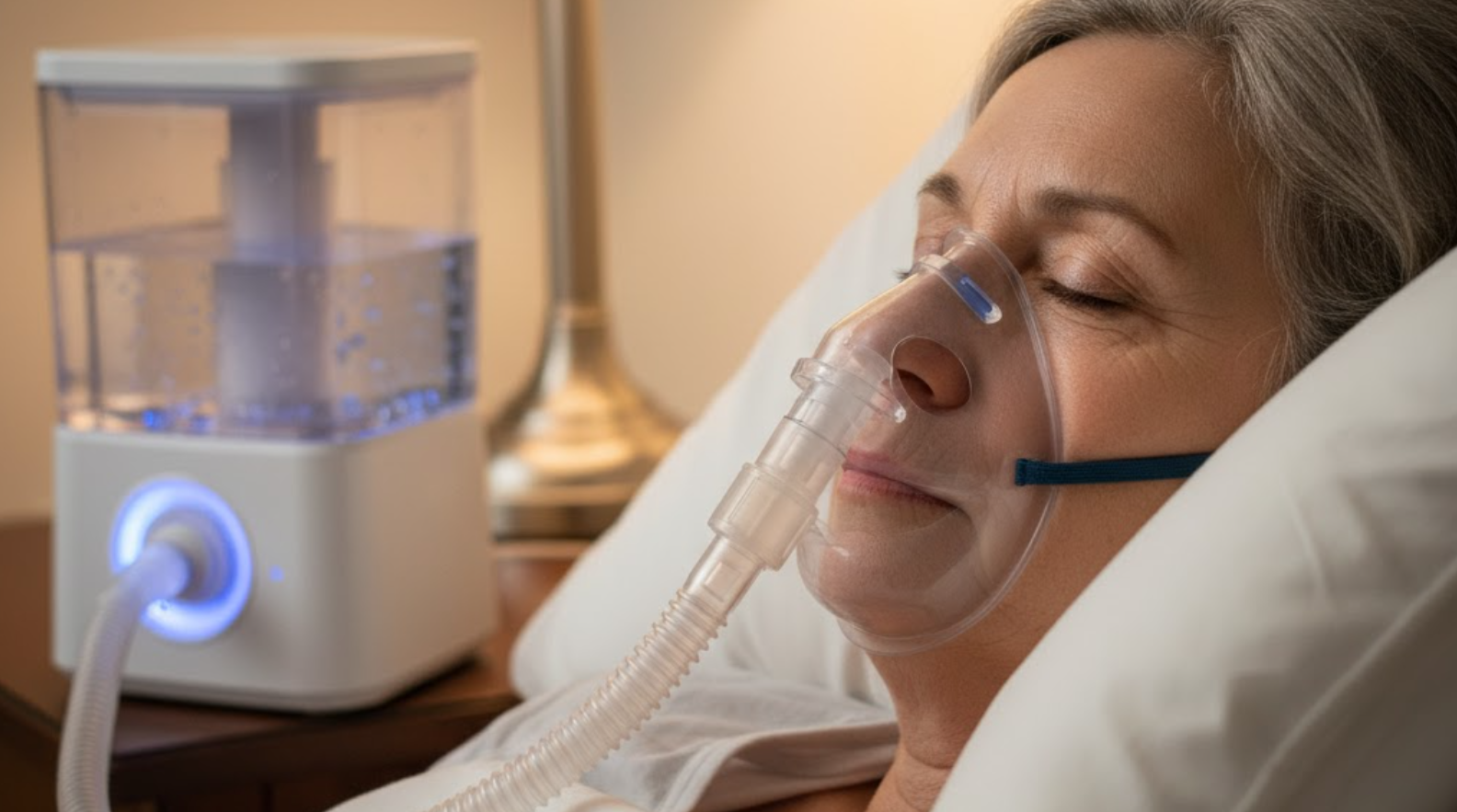
Comfort drives CPAP success. With the right CPAP humidifier, you can reduce dryness, calm congestion, and make therapy easier to stick with. We’re here to help you choose the best setup, adjust settings for South Texas weather, and keep everything clean and reliable.
At MacPherson’s Medical Supply, we support everyday life with durable medical equipment like beds, wheelchairs, canes, commodes, and even a simple basin. We also offer oxygen services, complex rehabilitation, custom orthotics and bracing, home and vehicle accessibility, and equipment repair.
If you’d like to know more about who we are and how we serve our community, read our story at MacPherson’s Medical Supply.
Call today to find the right equipment for you. Visit our local store to see our full selection. Contact our team to speak with a respiratory therapist. Learn more about our story and how we serve the Rio Grande Valley.
Visit MacPherson’s Medical Supply at 2325 S 77 Sunshine Strip, Ste. B, Harlingen, Texas 78550. We’re open Monday through Friday from 8:00 AM to 5:00 PM. For questions, email us at admin@macmedsupply.com or call 956-412-9100.